Doggie Steps Dog Training

Phoenix Dog Training - Informational Dog Articles

Looking for Mental Clarity? Get a Dog

Good Dog = No Jumping

How to achieve household harmony with your dog

Dog on the couch? Or on the floor? How to overcome the tough dog training dilemmas

Chewing is NOT Man’s Best Friend

Dog Food - Friend or Foe?

How to Prevent Dog Aggression


BEST DOG ON THE BLOCK Dog Tips
Looking for Mental Clarity? Get a Dog
by Mark Siebel, Owner, DOGGIE STEPS Dog Training

Upon getting my first dog, I was 10pounds overweight, drank to much, had above average stress, and minimal goals for my future. Now.. I’m not saying that the purchase of a puppy will completely lower your blood pressure, but, the parallels of mental and physical personal development can be directly linked with the care and responsibilities of owning a dog.

How you ask? For starters, I always give my customers the analogy that “cats” are like dating, and “dogs” are like marriage. The commitment to a dog is not to be taken lightly. You just can’t “go to Vegas” for the weekend and leave out a bowl of kibble, like with Morris the cat. With this said, the structure and discipline one will achieve through the routines of caring for a dog, will develop your mental and physical character accordingly.

  1. 1. Dogs must be fed twice daily (unless free-feeders eating at will.) This means that you MUST begin a schedule to adhere to, so your pooch eats at the same times, every day. Dogs primarily learn from routine and repetition, and look forward to the same things at the same time.
  2. Dogs must get exercise. Depending on the breed and age, the average dog should be walked at a minimum, once per day, for a brisk 15 minutes or 1 mile, which ever comes first. A tired dog is a “calm-submissive” dog, and that mental calmness will make for a harmonious home.
  3. Dogs must be kept occupied. The majority of a dogs chewing, barking, digging, and other incessant behaviors are due to a lack of mental and physical challenges. You must learn how your specific breed of dog will benefit from various “tasks” throughout the day to occupy their desire to work and please you.
  4. Finally, dogs must be rewarded with positive praise (vocal) and affection (posture and touch.) This is the primary way to bond with your dog. When done correctly on a routine basis, the connection will be uncanny of the respect and leadership that your dog will see in you.

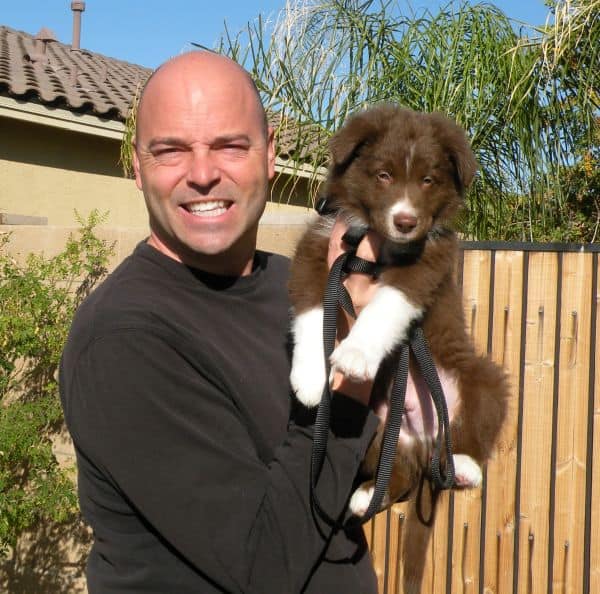
So, through the new found daily disciplines of owning my first Australian Shepherd, I lost 10 pounds, quit drinking, lowered my stress, and DOGGIE STEPS Dog Training was born. Through the dedication of dog ownership, my path of commitment and successes was laid. So how did I celebrate my new achievements? I bought another dog.

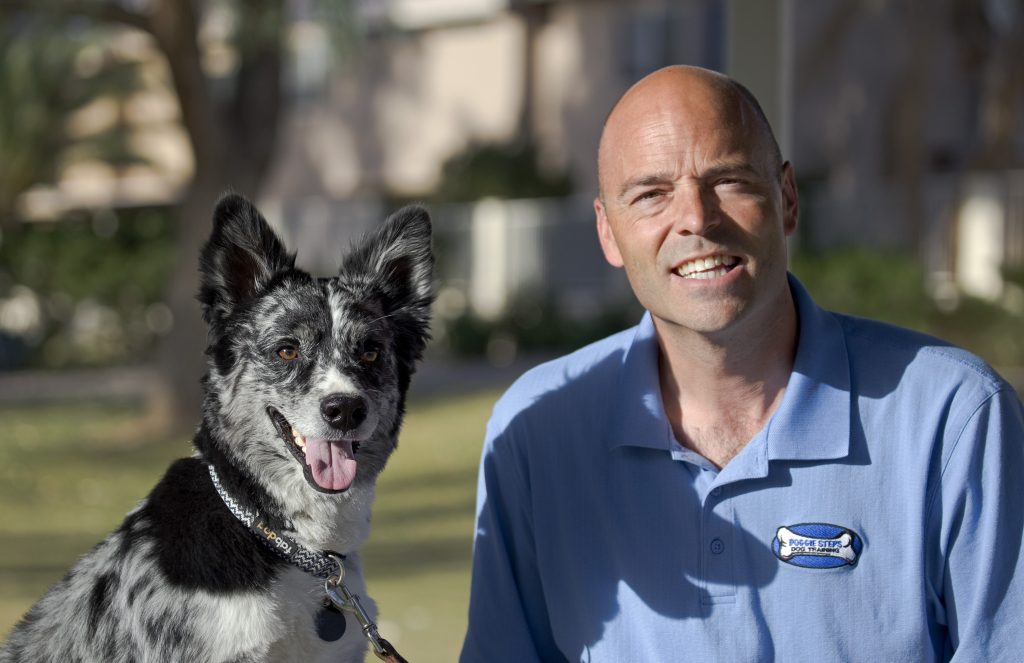
Mark Siebel has trained over 300 Arizona Valley dogs, appears on Channel 12 Arizona Midday, speaks regularly with local schools youth groups about the importance of dog safety and ownership, and donates time to kids who want to learn more about dogs. He is a member of APPSA (Arizona Professional Pet Sitters Association) and ASC of Arizona (Australian Shepherd Club of Arizona). Mark owns (2) Australian Shepherds named Leinie and Kugel. For more information or general dog questions, go to: www.DoggieStepsDogTraining.com, or call Mark Siebel @602.318.0122.

Back to top


BEST DOG ON THE BLOCK Dog Tips
Good Dog = No Jumping
by Mark Siebel – Owner - DOGGIE STEPS Dog Training

Do you dread going to your sisters house in fear knowing that her 95 pound lab will jump all over your new dress slacks? A dog should NOT prohibit you from going to friends and families homes. Jumping is one of the single most challenging actions for a dog to control. Dogs love all people (most of the time) and when they exercise they’re acute sense of smell, sight, and sound to your new or returning guests, the chances of jumping are increased.

Why you ask? From puppyhood, dogs are naturally oral animals. They lick to induce taste, acceptance, and affection. In the wild, wolf pups jump up to their mother’s mouth to render food. So, this is Ahwatukee NOT the wild, so no more jumping! Jumping can be drastically reduced by following the below simple tips:

  1. Practice entering your home and ignoring your dog. You’ll survive! No touching or eye contact, or high frequency greetings to increase your dog’s energy. Remain calm so your dog will do the same. After returning in from a potty break, command your dog to SIT. Count to 5, and then praise with voice and affection. Always give affection BELOW your waist, not above.
  2. Dogs want to be part of a “pack.” So, get in the habit of greeting your dog with your shoulders back and a strong firm posture. Clasp your hands together to look like the pitcher on a baseball team. When you look and act as a strong leader, your dog will begin to sit automatically out of respect. It is a dog’s instinct to bow to the leader.
  3. Less is more. If your dog is used to jumping on you as soon as you walk in the door, try turning sideways to limit the surface area for him to land on. After time, your dog will end up sliding down your legs as you turn, and then sitting when you again face him in your “pitcher” posture. If he jumps again, repeat the sideways turn. Dogs learn and thrive from “routine/repetition” so this sideways turn will pay off in the long run.
  4. Finally, THERE IS NO PERFECT DOG! Sure, dogs over 9-12 years old are close to perfect, but it came with great practice. So, when you have guests come over, put your dog on a leash. When he is calm after 1-2 minutes, then take him off the leash, and tell your guest to follow the above tips.

So, is teaching your dog not to jump on you and your guests easy? NO!! Routine and repetition will play a crucial role in changing your dogs jumping behaviors. Be patient and consistent and in no time at all you’ll be returning to your sisters home for the Holidays.

Mark Siebel has trained over 300 local Arizona Valley dogs, appears on Channel 12 Arizona Midday, speaks regularly with local schools youth groups about the importance of dog safety and ownership, and donates time to kids who want to learn more about dogs. He is a member of APPSA (Arizona Professional Pet Sitters Association) and ASC of Arizona (Australian Shepherd Club of Arizona). Mark owns (2) Australian Shepherds named Leinie and Kugel. For more information or general dog questions, go to: www.DoggieStepsDogTraining.com, or call Mark Siebel @602.318.0122.

Back to top


BEST DOG ON THE BLOCK Dog Tips
How to achieve household harmony with your dog
by Mark Siebel – Owner - DOGGIE STEPS Dog Training

Dictionary.com defines harmony as: agreement; accord; harmonious relations. If your dog counter surfs, jumps on guests, barks incessantly, chases your cat to no end, and chews your couch, your home is in a constant state of tension. Just imagine waking up to your dog bringing you the newspaper and your slippers to start the day? IT CAN HAPPEN!

When your dog is properly trained and knows it’s place in your pack, you will then experience the true “harmony” of owning a dog. When leadership signals are not properly directed and a dog begins to take over or lead a home, a dog then begins to view you as a PACK MEMBER, and not a PACK LEADER. If this happens, don’t panic, there is still hope! Below are a few simple tips to ensuring you will be viewed as the pack leader and not the pack play toy:

  1. Talk calmly and carry a big leash. In the wild, wolf packs communicate by vocal tones (howls and growls) and overall body language (posture and body positioning.) Domesticated dogs have limited response to size and time, but will be most responsive to human voice and posture. Exercise TONE not volume and be consistent with your corrections to let your dog know that you are the pack leader.
  2. Most assertive/aggressive dog goes last. In a dog pack, feed the calmest dog first. To stabilize an assertive/aggressive dog, be sure to give them food, toys, and all other items LAST. In addition, they should always follow your lead, not vice versa. You do not want to enable the dog to thinking as though THEY are the leader. Dogs ultimately want to be lead, so broaden your shoulders and deepen your voice when addressing commands to your dog.
  3. The parties over. Practice giving your dog boundaries. Just like children, when play time is over, you let them know in a firm, calm voice. As a child, I knew that my father would only ask me once, and maybe twice, but NEVER a third time! Same with a dog. Respect and leadership come from limited boundaries and the dog knowing when to stop certain incessant behaviors. Reward accordingly with verbal praise and physical touch.
  4. Finally - Routine and Repetition. Dogs are instinctual to routine and repetition. When the same daily exercises and activities are performed (ie..feeding times, walks, training drills, family arrivals and departures) you will find that your dog will be more responsive and in tune to it’s role in your pack.

Owning a dog should be a loving, calm, and positive experience for both owner and dog. By following the simple above tips, they will bring harmony to your home in no time, and just maybe your morning paper and slippers.

Mark Siebel has trained over 300 Arizona Valley dogs, has dog training tips published monthly in various AZ magazines, appears on Channel 12 Arizona Midday, speaks regularly with local schools youth groups about the importance of dog safety and ownership, and donates time to kids who want to learn more about dogs. He is a member of APPSA (Arizona Professional Pet Sitters Association) and ASC of Arizona (Australian Shepherd Club of Arizona). Mark owns (2) Australian Shepherds named Leinie and Kugel. For more information or general dog questions, go to: www.DoggieStepsDogTraining.com, or call Mark @602.318.0122.

Back to top


BEST DOG ON THE BLOCK Dog Tips
Dog on the couch? Or on the floor? How to overcome the tough dog training dilemmas
by Mark Siebel – Owner - DOGGIE STEPS Dog Training

In any new relationship, there are often disagreements on HOW to train and control each others’ dogs. After training over 400 dogs and their owners, I have encountered many couples who are still at odds with certain rules and limitations for their dogs. Some times it takes some “fine tuning” to acclimate an existing dog to its new home and new loved ones.

Dogs have individual personalities and unique behaviors just like humans. If you and your significant other are at odds on a particular dog challenge, below are a few good tips to get you BOTH headed in the right direction:

  1. Dogs are energy driven animals. Dogs are more in tune to human body language, tone, and smell than most people could ever imagine. Dogs hear at a wider range of frequencies than humans. The low end of the range is similar, but dogs hear noises up to 45 kHz, while humans only hear sounds up to about 23 kHz. This means that they could be hearing and responding to sounds that we can't hear at all. They also can smell up to 10x better than humans as well. Your energy radiates to where a dog can absorb your energy fields (both positive and negative) to how you’re feeling toward them. If you do NOT change your energy and attitude toward a dog’s incessant behaviors, chances are the problem will not go away.
  2. Pick your battles. I joke with my customers and say “I’m a dog trainer, not Dr. Phil.” Many decisions are based on rules and limitations with dogs and must be with direction and agreement from BOTH owners. Is the dog allowed: On the couch? On the bed? In the car? To get treats from the kitchen table? What about sitting at the dinner table on a kitchen chair? Whatever the issue, a compromise from both parties is a must. No dog behaviors will ever be changed with misdirection and inconsistent commands from either owner.
  3. Together time is quality time. To assist more in the connection with a spouse’s dog, try to spend a bit of alone “quality time” with the dog. Go on a walk, play fetch in the backyard, take a swim (if allowed in the pool), perform brushing and grooming duties, or take a turn for feeding time. Any of these activities will create a stronger bond with you and the dog and eventually lead to a more trusting and bonded connection. Dog learn and grow from routine and repetition, so plan to do these activities on a regular basis.
  4. Don’t sweat the small stuff. If you’re currently having a struggle with a dog in your pack, be patient! Talk to your spouse and see what steps you will need to take to rectify the challenge. Some behaviors can change quickly, other will take some time. Work as a TEAM to address the individual behavior challenges and be compassionate to the dog that may need some “special ” attention.

Dogs look to humans for direction, affection, and connection. If there are mixed signals and commands from owners and loved ones, it will be hard for your dog to become balanced in your pack. Communication is vital with couples to insure a clear training message is being delivered to your dogs. So, remember, dogs look to us for just about everything! Be a calm, patient pack leader, and your dogs will be in harmony in no time.

Mark Siebel has trained over 400 Arizona Valley dogs, has dog training tips published monthly in various AZ magazines, appears on Channel 12 Arizona Midday, speaks regularly with local schools youth groups about the importance of dog safety and ownership, and donates time to kids who want to learn more about dogs. He is a member of APPSA (Arizona Professional Pet Sitters Association) and ASC of Arizona (Australian Shepherd Club of Arizona). Mark owns (2) Australian Shepherds named Leinie and Kugel. For more information or general dog questions, go to: www.DoggieStepsDogTraining.com, or call Mark @602.318.0122.

Back to top


BEST DOG ON THE BLOCK Dog Tips
Chewing is NOT Man’s Best Friend
by Mark Siebel – Owner - DOGGIE STEPS Dog Training
“A” Magazine is a great way to spend those advertising dollars!

Upon finishing a lesson with a recent customer, she showed me a completely chewed up iPod. After hearing the story of how “Kona”, a loving and most energetic dog, had destroyed it, I had to laugh. I’m a rather compassionate man, but seeing an iPod chewed in over 40 pieces was truly amazing.

Dogs chew for two main reasons. First, to satisfy boredom and lack of a job. And second, to satisfy their natural instinct to use jaw muscles and clean their teeth. The first is often the most severe and costly. iPods are about $100. Your Pier One kitchen table is $3000. Below are a few simple tips to ensuring your dog will chew on his doggie bones, and NOT the kitchen table:

  1. Teach chewing boundaries from puppyhood. Dogs have a natural sensation to chew. Chewing exercises jaw muscles, satisfies boredom, and reduces tarter on teeth. Dogs need to be challenged mentally and physically to remain balanced. So, when you bring a new puppy home, have plenty of sturdy, dog friendly chew toys available. If you catch your puppy chewing the wrong toy (i.e. your hands, couch, or table leg) verbally correct and replace the wrong toy with the right toy.
  2. Less is More. Puppies will go through their “teething” stage up until about 6-7 months. During this time, it is best to keep their space limited. If I’ve heard it once, I’ve heard it a million times, “He only chews on the table when I’m not home!” So true. Your dog will naturally stay close to you when you’re home, and become more destructive when you’re away. So, limit his space. I recommend a sturdy metal crate, or a small room like a bathroom or laundry room. Be sure there are ample chew toys with which your dog can keep busy.
  3. Routinely replenish your chew toys. It’s a good idea to routinely change your dog’s chew toys. I wash soft toys every other week, and replace “hard” bones every 3 weeks. The new smells and texture from a perceived “new” toy, will be much more attractive to chew by your dog. Hard-Nylabones, Kongs filled with cheese or peanut butter, tennis balls, and hard-meat bones are all good chewing toys for your dog. Rawhide is often difficult for dogs to digest naturally, so limit this chewing option.
  4. Finally - Patience. Every dog’s chewing habits are different. Traditionally, dogs such as German Shepherds, Boxers, English Bull Dogs, Labrador Retrievers, and Golden’s will be the most intense chewers. Every dog will have the desire to chew, just supervise consistently and be sure your dog chews on the right toys and not the wrong ones.

So, the next time you’ve misplaced your iPod, don’t blame Fido. By following the above chewing tips, it’s a good chance your REO Speedwagon songs are safe and sound.

Mark Siebel has trained over 300 Arizona Valley dogs, has dog training tips published monthly in various AZ magazines, appears on Channel 12 Arizona Midday, speaks regularly with local schools youth groups about the importance of dog safety and ownership, and donates time to kids who want to learn more about dogs. He is a member of APPSA (Arizona Professional Pet Sitters Association) and ASC of Arizona (Australian Shepherd Club of Arizona). Mark owns (2) Australian Shepherds named Leinie and Kugel. For more information or general dog questions, go to: www.DoggieStepsDogTraining.com, or call Mark @602.318.0122.

Back to top


BEST DOG ON THE BLOCK Dog Tips
Dog Food – Friend or Foe?
by Mark Siebel – Owner - DOGGIE STEPS Dog Training

I find it funny how some dog owners have NO idea what they’re feeding their dogs; “This is what I’ve always fed FIDO, and he seems to like it.” Upon years of observing dog behavior and health trends, I have noted how the longevity and quality of a dog’s health is directly related to the food eaten.

I have recently adopted the attitude that I will NOT feed my dogs anything that I wouldn’t eat. Holding true to this philosophy, below are a few simple tips to ensuring your dog will be treated to a well balanced meal and not leftovers from who knows where:

  1. Dog food nutritional standards. According to the Association of American Feed Control Officials (AAFCO), all of a pet’s dietary needs (ie..proteins, fats, carbohydrates, vitamins, and minerals) must be present in every meal. The AAFCO approval label is found on 95% of all dog food, including those that have inferior nutritional value. So, how do we know that the food is actually nutritionally sound for our dogs? Do your homework!!
  2. Read the ingredients label on your dog food bag. Most inexpensive dry dog foods contain “fillers” such as corn, millet, wheat, and rice, ALL of which are not natural in a dog’s diet. Be aware that the first 5 ingredients on the ingredients label will comprise over 85% of the food’s content. If any of the following ingredients are currently listed on your dry food, BEWARE!! *4-D: comprised of meat from dead animals, including the possibility of tainted and/or diseased meat. *Propylene Glycol: a preservative thought to have the similar molecular structures to that of antifreeze. *BHA & BHT: a suspected carcinogen. *Ethoxyquin: a major preservative used in rubber tires, and sometimes in dog food as a synthetic antioxidant to keep fats from turning rotten.
  3. Find a Veterinarian who practices “Holistic” Medicine. Today, most traditional vets don’t even own a dog!! They recommend a dog food that “coincides” with your dog’s current ailment, and will most often recommend a steroid injection (cortisone) to mask the symptoms of the dog’s illness while not treating the actual disease. It’s nice to have a vet who will assess your dog’s history of illness and prescribe the appropriate foods and recovery program to establish a healthy nutritional balance.
  4. Finally – What to feed your dog. A raw, homemade diet is often chosen by dog owners who want to provide the freshest organic meats, vegetables, and proteins to their dogs. This often requires a lot of work, time, and money. To satisfy your dog’s appetite, the following dry dog foods have been tested/qualified to be the top dry brands for both overall nutritional balance, and immune strength: Innova, Eagle Pack, Canidae, Wellness, Fromm’s, Solid Gold, Canine Caviar, California Natural, Natural Planet Organics, and Prairie. ALL OF THESE FOODS ARE MADE IN THE U.S.A. These same brands have wet food to accompany the dry. I recommend a tablespoon of wet food daily for added protein and flavor.

If we eat at McDonald’s every day, we get overweight and a triple bypass at the age of 62. Eating with natural/organic food in mind, we can achieve better future health and the comfort of knowing that our immune system is more resilient against disease. So, the next time you’re thinking about saving a few bucks by buying the cheapest dog food at your local supermarket, think twice.

Mark Siebel has trained over 400 Arizona Valley dogs, has dog training tips published monthly in various AZ magazines, appears on Channel 12 Arizona Midday, speaks regularly with local schools youth groups about the importance of dog safety and ownership, and donates time to kids who want to learn more about dogs. He is a member of APPSA (Arizona Professional Pet Sitters Association) and ASC of Arizona (Australian Shepherd Club of Arizona). Mark owns (2) Australian Shepherds named Leinie and Kugel. For more information or general dog questions, go to: www.DoggieStepsDogTraining.com, or call Mark @602.318.0122.

Back to top


BEST DOG ON THE BLOCK Dog Tips
How to Prevent Dog Aggression
by Mark Siebel – Owner - DOGGIE STEPS Dog Training

Many dogs exhibit some form of assertive/aggressive behavior throughout their lifetime. There are many causes of aggression, stemming from lack of littermate socialization, limited dog/dog interaction, and too much freedom as they mature. Dogs are pack animals and need to be socialized regularly with other balanced, healthy dogs.

Dogs, by instinct want to follow a leader, so routine and repetitious activities must be carried out for your dog daily. These activities must ALWAYS show your dog that you are the pack leader, which instills a calm/submissive state of mind for your dog. By following the below tips on preventing dog aggression, you may just be invited back to your next neighborhood block party:

  1. Food/toy possession. From the moment you bring your new puppy home, make it clear that NO food or toy is his! I suggest to my customers to put their face and hands in the puppy’s food bowl to ensure that the dog learns that food is social and not possessive. I also suggest a “give/take” exercise with bones and chew toys. Give your dog a bone and take it away immediately. After this routine, give your dog the bone, let him chew on it for 5 minutes, and then take it back again. This will teach your dog that NOTHING is his and all food/toys are given and owned by humans.
  2. Human first, dog second. How many times have you seen a dog on a walk and dragging its owner down the street? I call this the “ski boat” walk. The dog is the boat and the human is the skier! Not all dogs will take an assertive/aggressive stance, but any herding/sporting/working dog will have a much better chance of becoming “Alpha” if not shown the proper pack order sequence. Be sure to “lead” your dog on the walk, out your door, and anytime that you have forward motion. This will teach your dog to follow and not lead. Leave the skiing for your summer vacation.
  3. Socialize your puppy from a young age. Many vets will recommend quarantining your puppy until 16 weeks of age, or upon completion of ALL necessary vaccines, including rabies. The first year of a dog’s life is crucial for socializing to build calm relations with other dogs and humans. So, when socialized with HEALTHY and BALANCED dogs, your dog will have a greater chance of less assertive/aggressive tendencies as he ages. Form a “puppy social hour” at your home with friends, family, and neighbors dogs. Dogs are pack animals and will form solid social bonds with 4-8 other balanced dogs. Dog parks are a good way to socialize your dog ONLY if it’s a clean park with other healthy, well-trained, balanced dogs.
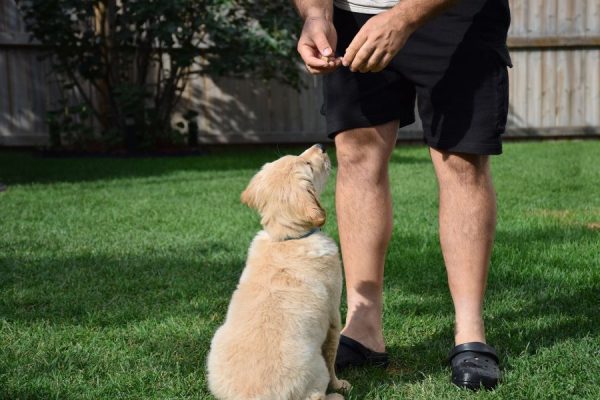
  4. Finally – Make your dog work for everything. No free lunch is the point here! From a Chihuahua to a Great Dane, make your dog work for its food and treats. Have your dog sit before meals, at the curb before crossing the street, and before exiting your home. This routine will always have your dog looking to YOU for the next command, therefore creating a dog follower, human pack leader relationship.

With the proper mixture of command work, nutrition, and exercise, your dog will experience the utmost state of mind and existence. By taking a “human first” approach with your dog, it will result in a natural “follower” instinct from your dog. Be a consistent and directive leader, and your dog will be calling you boss in no time.

Mark Siebel has trained over 400 Arizona Valley dogs, has dog training tips published monthly in various AZ magazines, appears on Channel 12 Arizona Midday, speaks regularly with local schools youth groups about the importance of dog safety and ownership, and donates time to kids who want to learn more about dogs. He is a member of APPSA (Arizona Professional Pet Sitters Association) and ASC of Arizona (Australian Shepherd Club of Arizona). Mark owns (2) Australian Shepherds named Leinie and Kugel. For more information or general dog questions, go to: www.DoggieStepsDogTraining.com, or call Mark @602.318.0122.

Back to top


Phoenix Dog Training - Informational Dog Articles

** NO SHOCK OR CHOKE COLLARS USED!! **
I WILL BE THE ONLY ONE WHO TRAINS YOUR DOG!!
NO “REPLACEMENT” OR“PART-TIME” TRAINERS WILL BE USED TO TRAIN YOUR DOG!!

Mark Siebel, Owner-Lead Trainer
DOGGIE STEPS, LLC.
602.318.0122
info@doggiestepsdogtraining.com

Site Design by Lindsay Coats

dog training, trainer, obedience, behavior, professional, certified, school, house, phoenix, scottsdale, paradise valley, chandler, mesa, tempe, arizona, az, in home, at home, east valley, off leash, aggression, private behavioral, gilbert, doggy steps, doggie steps

Phoenix dog trainer offers dog obedience training services in Scottsdale, Paradise Valley, Mesa, Chandler, Gilbert, Tempe AZ including obedience and behavior training – Professional AZ dog trainer.